North by Northwest, 1959 · Eyewear
rounded wayfarer/P3-style tortoiseshell sunglasses
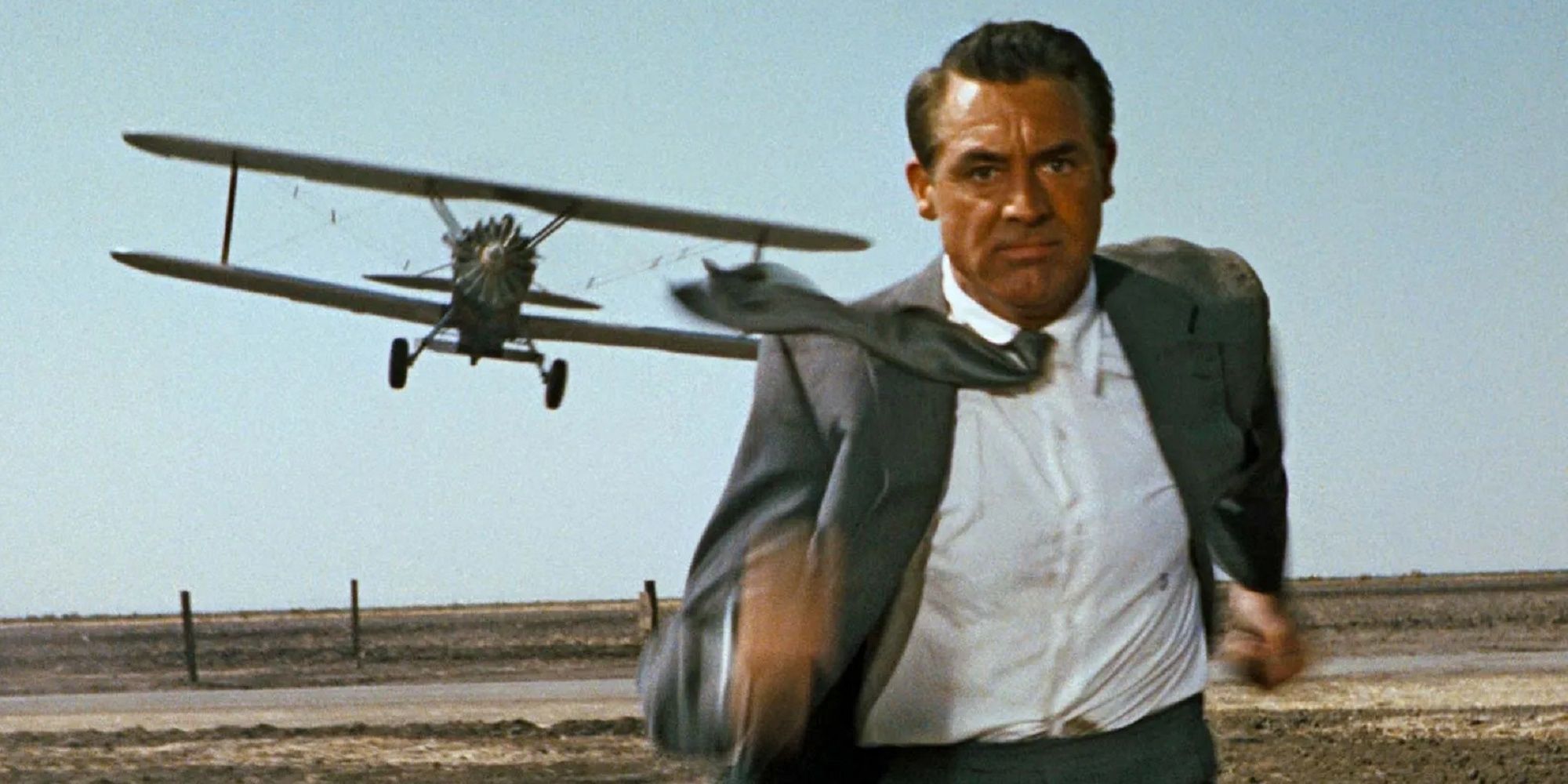
Roger Thornhill in North by Northwest, 1959 — as worn by Cary Grant
North by Northwest, 1959 · Eyewear
Roger Thornhill in North by Northwest, 1959 — as worn by Cary Grant
After Lester Townsend is killed at the United Nations and Roger Thornhill’s face is splashed across newspapers, Hitchcock carries him into Grand Central Terminal for a hurried station-to-train escape.
The scene
After Lester Townsend is killed at the United Nations and Roger Thornhill’s face is splashed across newspapers, Hitchcock carries him into Grand Central Terminal for a hurried station-to-train escape. Thornhill telephones his mother, asks for a bedroom on the Twentieth Century, realizes the ticket clerk has quietly alerted police, and slips away toward the overnight 20th Century Limited for Chicago. The sunglasses enter as a quick disguise inside that manhunt: by the time he is moving through the sleeper and into the dining-car stretch with Eve Kendall, the dark lenses help him pass as another affluent passenger rather than the fugitive everyone has just seen in print.
Eve, the blonde traveler who has already diverted the detectives, becomes the only person in the scene who fully sees through the concealment. In that moment the glasses fit Thornhill’s whole fabricated identity: he is an advertising executive surviving by surface, polish, and improvisation. Hitchcock turns the accessory into behavior rather than mere costume. The train itself was one of America’s most famous luxury expresses, so the eyewear also keeps Thornhill aligned with the sleek, upper-class world he knows how to perform even while panicking.
The framing tightens once he is aboard. Grand Central’s rush gives way to compact sleeper and dining-car interiors, where Robert Burks’s VistaVision compositions and controlled lighting make concealment feel brittle rather than secure. Rear-projection windows carry the Hudson River daylight outside, while the camera keeps returning to Grant’s face in medium close views that let the glasses read as both shield and giveaway.
Archive — the object
An unattributed pair of mid-century plastic sunglasses worn by Cary Grant as Roger Thornhill in Alfred Hitchcock’s 1959 film North by Northwest. No commercial maker has been definitively documented in public wardrobe records or reliable manufacturer attributions, so the safest identification remains non-branded. That uncertainty matters: unlike many famous screen accessories later tied to a house model or archive reference, Thornhill’s shades survive in film culture as an anonymous object, recognized by silhouette rather than label. What can be described with confidence is the frame itself. On screen it reads as a full-rim molded plastic design in mottled orange-brown tortoiseshell, with a rounded wayfarer or P3-like front, a keyhole bridge, and dark lenses often read as green bottle glass.
The frame appears thicker and softer in outline than many later homages, with a distinctly late-1950s balance of practicality and polish. Speculation linking it to Tart Optical Arnel frames has been publicly challenged, and no verifiable hinge stamp, lens engraving, or surviving model code has surfaced from reliable public materials. In the film, the sunglasses arrive as part of Thornhill’s improvised attempt to disappear after the United Nations killing sends him on the run. Costume credit on North by Northwest went to Edith Head, though Cary Grant’s wardrobe on Hitchcock films is also closely associated with his own exacting taste.
On screen the glasses are not introduced as gadgetry or luxury branding, but as a believable civilian purchase pressed into service as disguise. Their afterlife has been unusually strong for an object with no confirmed maker. Writers and menswear historians repeatedly single them out among the film’s most memorable accessories, and modern brands have built tributes around their shape rather than any authenticated original pattern. Oliver Peoples launched a Cary Grant collection inspired by the North by Northwest frames, while The Rake collaborated with Kirk Originals on a facsimile.
Acquisition ticket
Sign up free to save items, get alerts, and track availability.
Production Notes
Access the background file: ask anything beyond the page.