Folio No. 76Suit
Kilgour, French & Stanbury · Suit
Two-piece Glen Check Suit
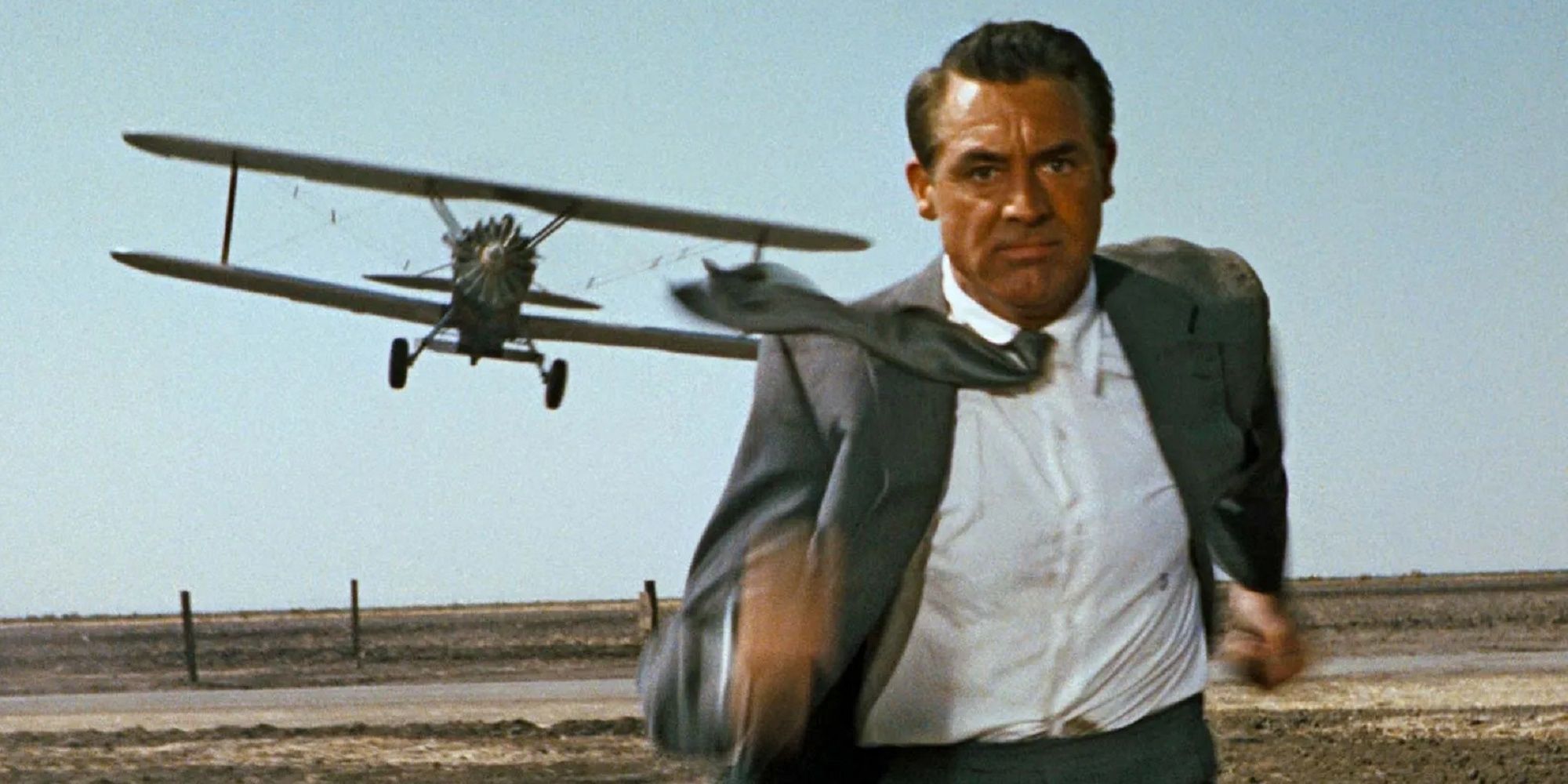
Roger Thornhill in North by Northwest, 1959 — as worn by Cary Grant
Kilgour, French & Stanbury · Suit
Roger Thornhill in North by Northwest, 1959 — as worn by Cary Grant
01
The scene
Roger Thornhill arrives by bus at the isolated Prairie Stop on Route 41, expecting a meeting with the elusive George Kaplan in what the film presents as rural Indiana. On the desolate, wide-open roadside—an empty landscape of highway, flat fields, and distant corn under harsh midday sun—his polished Madison Avenue business silhouette is left completely exposed. As he waits, studies the passing traffic, and exchanges a few wary words with a farmer across the road, the suit emphasizes his identity as a sophisticated urban advertising executive abruptly removed from the routines and protections of city life.
The sequence turns terrifying when the crop-dusting plane shifts from background detail to deliberate attacker, strafing Thornhill and forcing him to run frantically across roadside gravel, dusty fields, and into the cornfield, diving for cover as the aircraft makes repeated murderous passes. Hitchcock frames the action in long shots and open space, so the tailored suit reads as a lone, controlled human figure overwhelmed by mechanical violence.
As Thornhill sprints toward the highway and finally flags down the tanker truck, the meticulously cut garment becomes increasingly disheveled, dust-stained, and sweat-marked, visually mirroring the collapse of his composure. What begins as a pristine emblem of his Madison Avenue persona ends the scene as a dirtied testament to his narrow escape.
02
The object
Roger Thornhill’s signature suit in North by Northwest is widely attributed by costume-history sources to Kilgour, French & Stanbury of Savile Row, with tailoring credited to Arthur Lyons; duplicate versions for action work are also noted as having been produced separately in Beverly Hills. The house, formed in the early 20th century from the merger of the Kilgour and French tailoring businesses and later associated with Fred and Louis Stanbury, was known for elegant bespoke tailoring and counted Cary Grant among its Hollywood clients.
The suit is a two-piece, single-breasted business suit cut from lightweight worsted wool in a fine plain-weave Glen check that reads blue-grey on screen, though some sources describe it as medium grey with a blue cast depending on lighting. Construction details commonly cited include a 3-roll-2 front, notch lapels, ventless back, welt breast pocket, jetted hip pockets, and trousers with a high rise, double forward pleats, turn-ups, and side adjusters instead of belt loops. The overall silhouette reflects Kilgour’s refined mid-century tailoring: clean, balanced, and restrained rather than flashy.
In the film, this blue-grey checked suit functions as Thornhill’s principal wardrobe and one of the most influential examples of mid-century cinematic menswear. Frame analysis and costume commentary indicate that the crop-duster sequence likely used a duplicate stunt or action version, but the referenced design remains the same Kilgour, French & Stanbury glen check two-piece configuration.
03
Provenance
Sign up free to save items, get alerts, and track availability.
Production Notes
Access the background file: ask anything beyond the page.