Le Samouraï, 1967 · Coat
Khaki Trench Coat
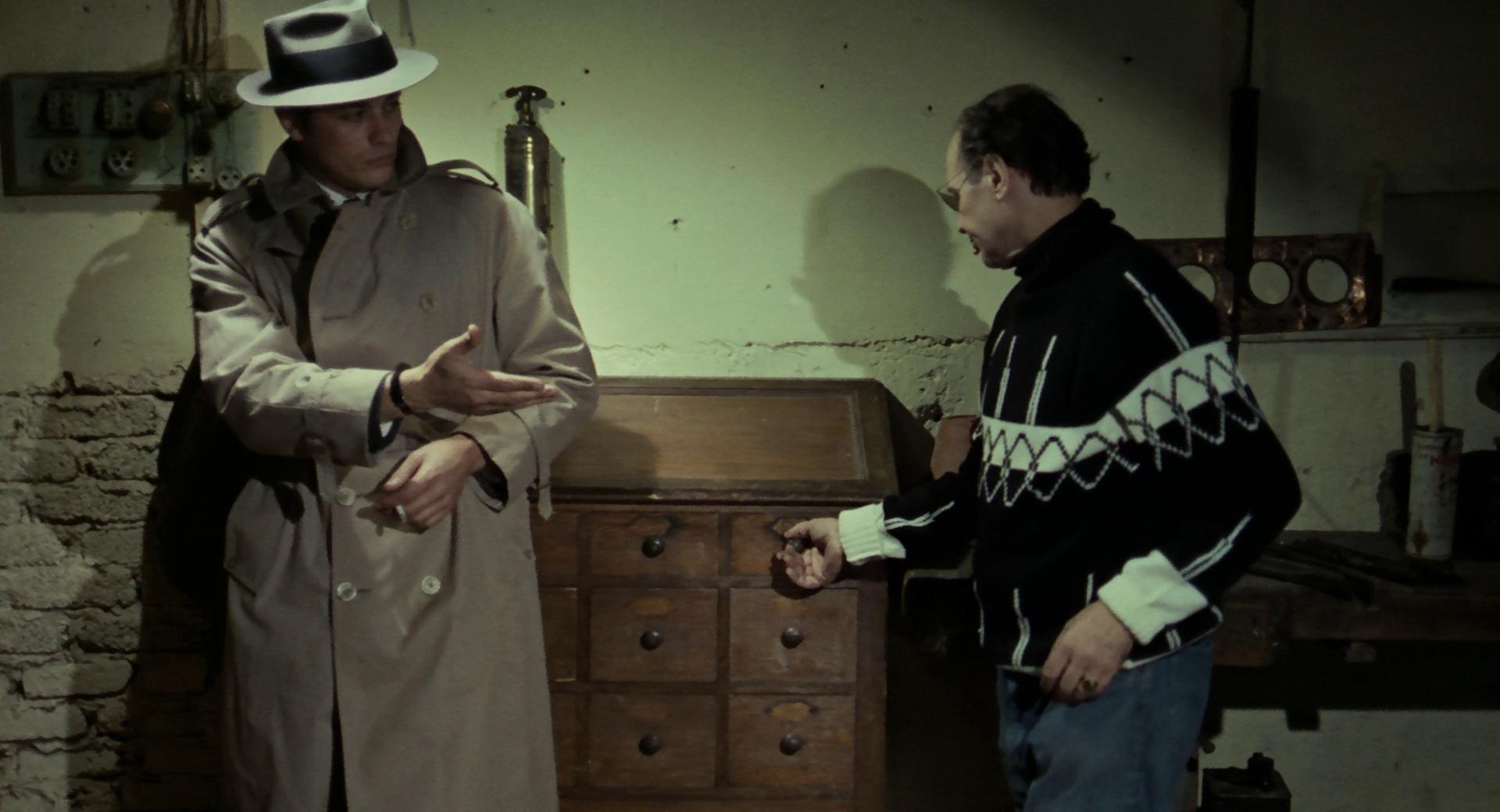
Jef Costello in Le Samouraï, 1967 — as worn by Alain Delon
Screen Original
Spotto identifies the exact make, model and provenance seen on screen. We do not catalogue replicas or lookalikes.
Le Samouraï, 1967 · Coat
Jef Costello in Le Samouraï, 1967 — as worn by Alain Delon
Screen Original
Spotto identifies the exact make, model and provenance seen on screen. We do not catalogue replicas or lookalikes.
The scene
“In the opening sequence of Le Samouraï (1967), Jef Costello puts on his pale khaki trench coat before leaving his sparsely furnished Paris apartment.”
The scene
In the opening sequence of Le Samouraï (1967), Jef Costello puts on his pale khaki trench coat before leaving his sparsely furnished Paris apartment. The coat enters the film through a private dressing ritual rather than a public confrontation. At the apartment mirror, its pale surface becomes part of the carefully assembled appearance that Costello checks before stepping outside. This is the preparation preceding his movements through Paris, not a later return to the apartment or an encounter with the police.
The trench coat gives a visible structure to Costello’s methodical preparation. Delon handles the departure without explanatory dialogue, allowing the act of dressing to establish the character’s controlled manner. In this setting, the coat functions as something deliberately assumed: the outward presentation of a professional whose occupation the opening gradually discloses. Its double-breasted front, extended length, and belted construction give that presentation a clearly defined outline without requiring a label or other conspicuous identifying mark.
At the mirror, the coat remains central to the image of Costello inspecting himself before departure. Its light beige-to-khaki appearance sits within the apartment’s subdued visual scheme, photographed by Henri Decaë. The reflected view makes the completed silhouette, rather than a manufacturer’s detail, the subject of attention. The sequence establishes the garment’s appearance clearly, but it does not establish its commercial provenance or identify a particular model.
The object
The pale trench coat worn by Alain Delon as Jef Costello in Le Samouraï (1967) has no securely documented manufacturer or commercial model. Pathé’s production credits name Robert Christidès for costumes, establishing a credited wardrobe practitioner without identifying who manufactured this particular garment. “No Brand” should therefore be understood as an attribution placeholder, not evidence that the coat was deliberately unbranded or made entirely within the production.
The documented design is a long, double-breasted trench coat with a waist belt and shoulder epaulettes. These features distinguish its construction more reliably than an unsupported brand attribution. Its overlapping front and adjustable waist organize the silhouette around a broad upper body and an extended skirt. Available production information does not establish the fibre composition, weave, waterproofing treatment, lining material, or hardware supplier; describing the fabric specifically as cotton gabardine would exceed the surviving evidence consulted here.
The on-screen coat is described variously as beige, pale khaki, and taupe, reflecting the close tonal range visible in reproductions of the film. No authenticated manufacturer’s colourway name or reference number accompanies those descriptions. In the apartment mirror sequence, the same pale outer garment forms Costello’s departure silhouette. Its place in the production is documented more securely than its retail origin: Pathé records the film’s French theatrical release as October 25, 1967, and identifies Christidès in the costume credit.
Where to procure
The full Le Samouraï file →Sign up free to save items, get alerts, and track availability.
Production Notes
Access the background file: ask anything beyond the page.
The Archive
Search the permanent collection for any garment, timepiece or object across cinema and television. Name the film, character or scene.