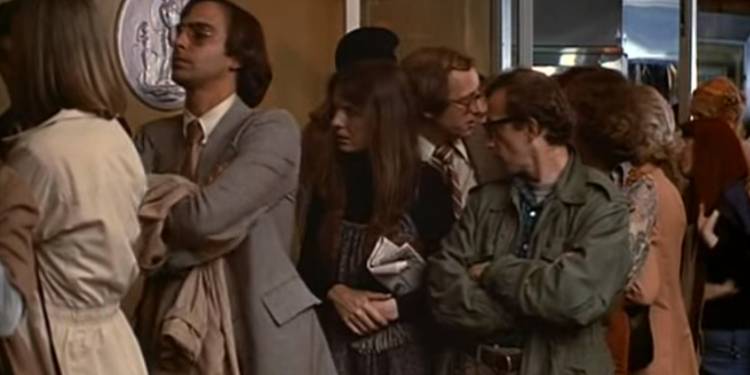
Ralph Lauren · Tie
Polka-Dot Tie
Annie Hall (Diane Keaton) in Annie Hall, 1977 — as worn by Diane Keaton
Screen Original
Spotto identifies the exact make, model and provenance seen on screen. We do not catalogue replicas or lookalikes.
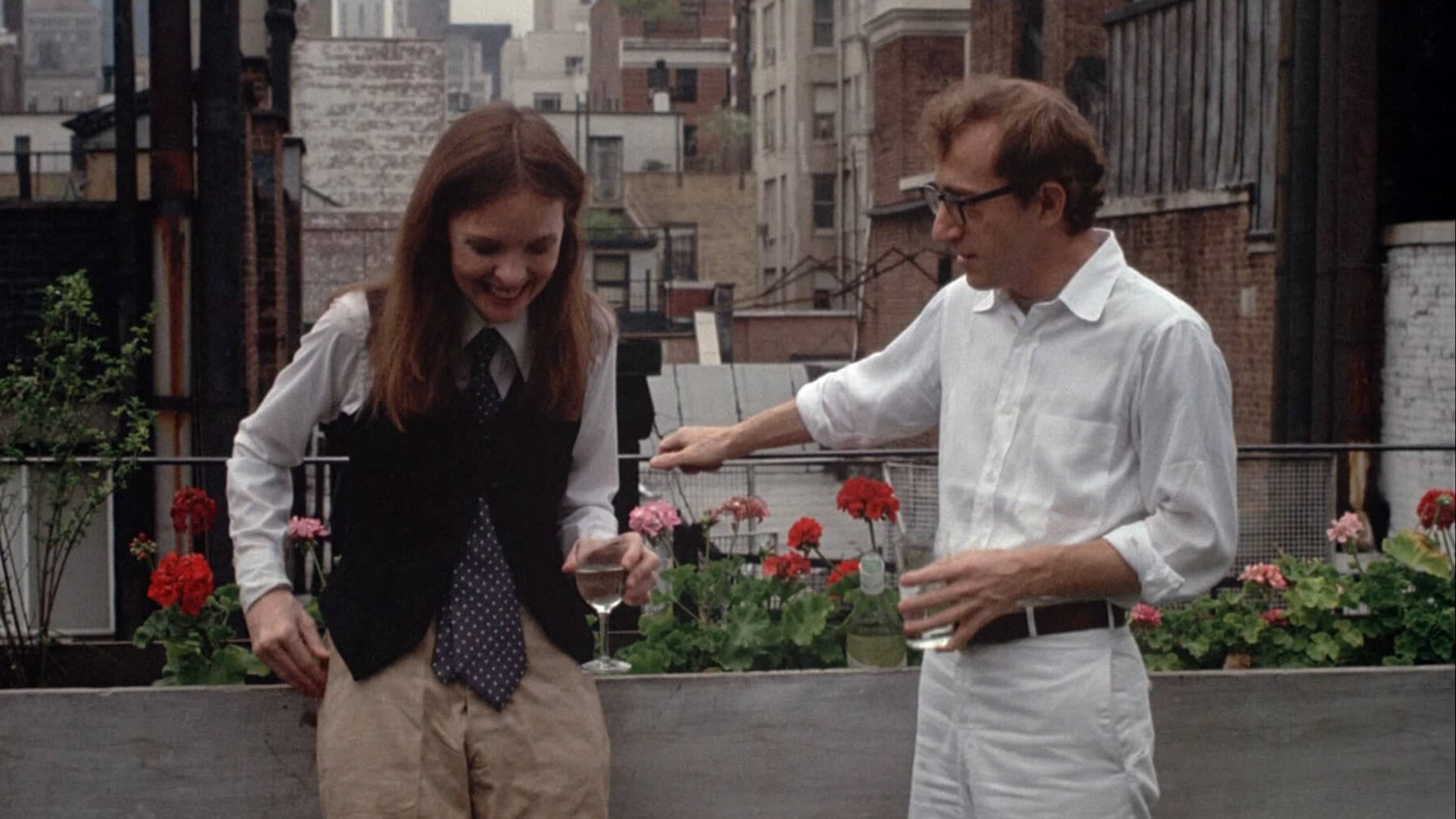
Ralph Lauren · Tie
Annie Hall (Diane Keaton) in Annie Hall, 1977 — as worn by Diane Keaton
Screen Original
Spotto identifies the exact make, model and provenance seen on screen. We do not catalogue replicas or lookalikes.
The scene
“Annie Hall’s long, dotted Ralph Lauren tie appears during her first extended encounter with Alvy Singer after their New York tennis game in Annie Hall (1977).”
The scene
Annie Hall’s long, dotted Ralph Lauren tie appears during her first extended encounter with Alvy Singer after their New York tennis game in Annie Hall (1977). Their tentative conversation moves the relationship beyond a sporting introduction and toward the visit to her apartment. The tie belongs to this early courtship sequence, where Annie’s distinctive presentation accompanies the hesitant exchanges through which the two begin getting acquainted. Its conspicuous length makes it immediately legible as deliberately adopted menswear rather than a discreet decorative accent.
As Annie negotiates the conversation, the tie supplies a visual counterpoint to her uncertainty: she can inhabit an unconventional appearance while remaining visibly nervous about a new acquaintance. That contrast continues at her apartment, where she and Alvy discuss photography on the balcony. Subtitles expose the insecurities and attraction beneath their attempts at cultured conversation. The tie remains part of Annie’s outward presentation while the film distinguishes between what she says and what she privately worries her words might reveal.
In the balcony’s conversational framing, the patterned tie occupies the central area beneath Annie’s face, keeping its dotted surface readable without requiring an isolated product shot. Its long vertical shape provides a stable visual element during an exchange driven by pauses, glances, and competing internal thoughts. The effect depends on its ordinary identity as a man’s necktie: Annie wears it without any narrative explanation. Keaton’s personal approach to dressing informed the film’s costumes, making this detail part of the performance’s documented connection to her own style.
The object
This dotted necktie is attributed to Ralph Lauren, whose business began with neckwear under the Polo name in 1967. Lauren initially developed that line through the manufacturer Beau Brummell, working from the Empire State Building. The company’s historical timeline describes his first collection as wide, handmade ties inspired by Old Hollywood. Neckwear was therefore the designer’s original commercial category, preceding the full menswear collection introduced in 1968.
The screen version has a blue ground punctuated by small, pale dots and a long, pointed front blade. Its identifying features are the repeated spot pattern, elongated proportions, and conventional knotted construction. Published attribution identifies Ralph Lauren as the maker, but the available documentation does not establish a commercial model name, exact dimensions, weave, lining composition, or manufacturing location. Silk should not be treated as confirmed merely because that material appears in surviving early Lauren neckwear held by museum collections.
Diane Keaton wears the tie as Annie Hall in the 1977 film’s post-tennis courtship sequence. AnOther specifically identifies Annie’s necktie as Ralph Lauren and reports increased tie sales as women recreated the appearance. Its authorship should be distinguished from the overall costume conception, which involved costume designer Ruth Morley and Keaton’s established personal style. The Metropolitan Museum of Art preserves a Ralph Lauren necktie dated 1968–70 in its Costume Institute collection, documenting the designer’s early work in this category.
Where to procure
The full Annie Hall file →Sign up free to save items, get alerts, and track availability.
Production Notes
Access the background file: ask anything beyond the page.
The Archive
Search the permanent collection for any garment, timepiece or object across cinema and television. Name the film, character or scene.