The lights came on, the heat rose, and Paramount’s automatic sprinklers decided the neighbourhood needed rain. On Stage 18, where Alfred Hitchcock was making Rear Window, the electrical installation had become the studio’s biggest such undertaking. According to American Cinematographer’s production history, the sprinklers had to be disconnected before filming could continue. A film about a man watching other people through their windows had acquired a fairly serious infrastructure problem. Greenwich Village was indoors, and the weather was coming from the ceiling.
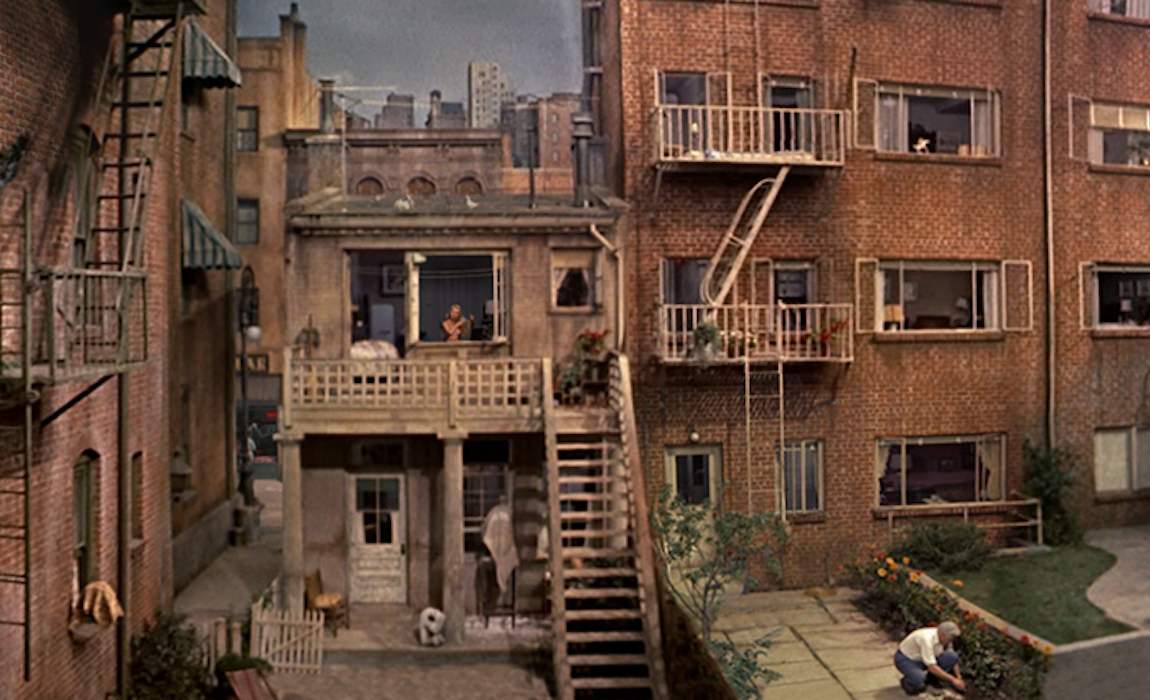
Hitchcock had briefly considered filming in the real Greenwich Village. Instead, he sent four photographers to New York to record the district from different angles, in different weather and light, then brought the neighbourhood home to Hollywood. The distinction matters. Rear Window’s courtyard looks like the sort of inconvenient architectural accident that develops over decades: windows facing windows, private lives exposed by bad planning. Yet its apparently casual geography was manufactured for one particular observer. The location scouts were gathering evidence for a place that would never exist outside a soundstage.
The construction demanded a useful reversal of normal building practice: start by taking out the floor. In TCM’s account, art director Henry Bumstead proposed using the basement as courtyard level, leaving James Stewart’s supposedly elevated apartment on the main stage floor. Fifty men worked for two months on a set containing 31 apartments, 12 fully furnished. Stewart’s character, the injured photographer L. B. Jeffries, would appear stranded above the yard; Stewart himself was at ground level. The vertigo was architectural sleight of hand. Before Hitchcock could imprison his leading man in an apartment, somebody had to excavate the view.
“Before Hitchcock could imprison his leading man in an apartment, somebody had to excavate the view.”
Robert Burks, the cinematographer, then had to make this construction behave like daylight. Every visible apartment needed its own lighting, and the entire courtyard had to work by day and night. Burks arrived roughly ten days before shooting with a skeleton crew to pre-light it. A chart identified the switches required for each scheme; changing night into day took about 45 minutes. It was less a street than a vast electrical instrument, with the electricians supplying the sunrise. The apparent freedom of the view depended on an extraordinary amount of preparation behind it.
There was a catch: visibility could look suspicious. Early lighting attempts made the daytime apartments resemble shop windows. Burks needed viewers to read the neighbours’ actions without feeling that each tenant had obligingly switched on a display light. Graduated scrims moderated the interior illumination as performers approached their windows. The technical task was also a dramatic one. Too little light and a gesture disappeared; too much and a supposedly private room announced itself as a stage. The audience had to believe it was noticing things, not being shown them.
Hitchcock directed much of this distant activity from Jeff’s apartment, communicating with performers through short-wave radio and flesh-coloured earpieces. For the rainstorm scene, he turned that arrangement into a small practical joke. Sara Berner and Frank Cady, playing the couple asleep on their fire escape, received separate, contradictory instructions while the other’s receiver was off. When they tried to rescue their mattress, they pulled in different directions; Cady ended up falling through the window. Domestic incompatibility, supplied by radio. The neighbours might look independent, but their landlord had a microphone.
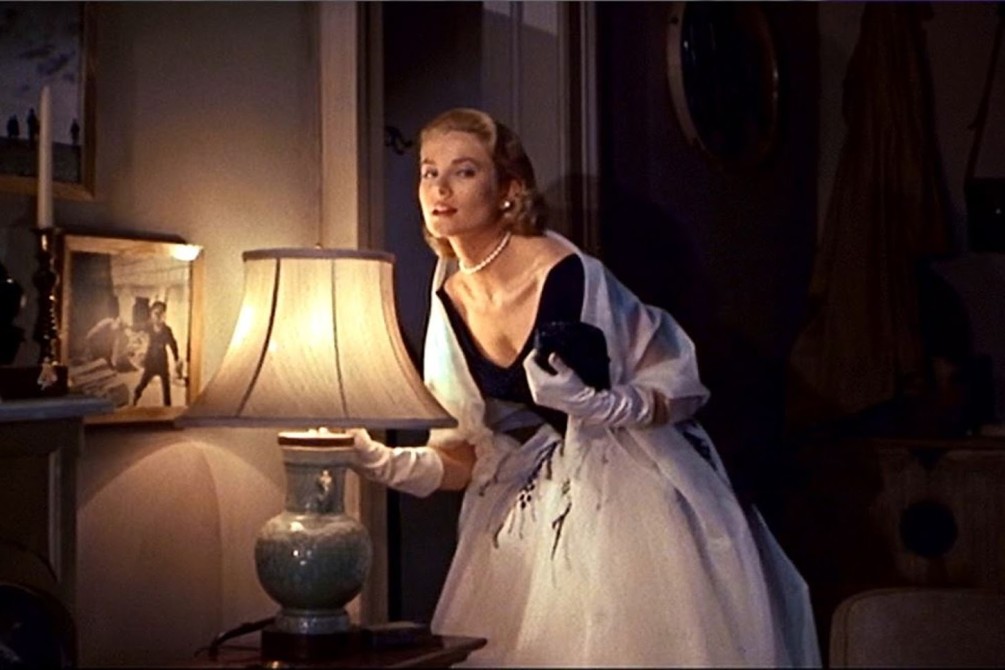
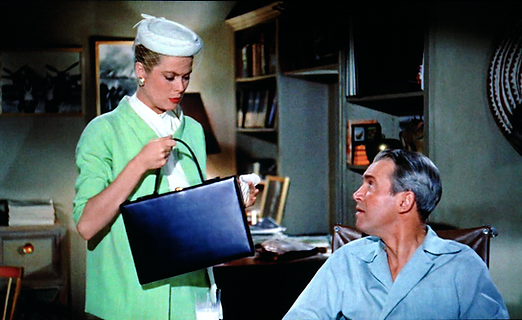
Even the clothes helped organise the distance. Hitchcock worked with Edith Head to give the courtyard’s figures readily identifiable appearances. Miss Lonelyhearts wore emerald green; when Grace Kelly’s Lisa later appeared in a green suit, the colour linked the solitary neighbour’s romantic predicament with the central couple’s troubles. Across that much space, a costume could do work that dialogue could not. These were not simply attractive clothes placed against brickwork. They were signals, sized for someone watching from the opposite building—and for everyone sitting behind him in the cinema.
Sound obeyed the same address. Rather than bringing the neighbours acoustically close, the production recorded their sound from Stewart’s window across the stage, preserving a hollow, distant quality. The enormous construction was designed to make other lives available but not quite accessible: rooms you could inspect, voices you could only partly catch. All that furnished space, all those lights, and the audience still had to stay with the man at the window. Down below was a basement. From his chair, it was somebody else’s backyard.