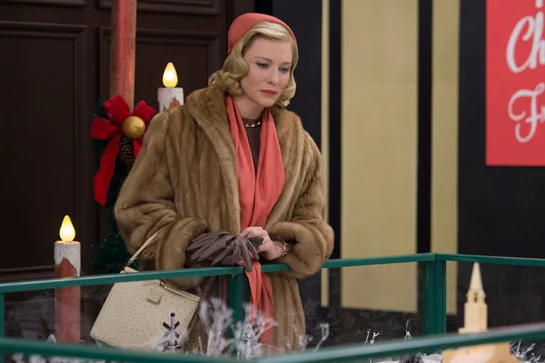
The gymnasium had a mezzanine, just like an old department store. It also had no heat, no water and, eventually, no workable contract. For Carol’s production designer, Judy Becker, this was another promising Cincinnati location going nowhere. She needed a toy department for the encounter between Cate Blanchett’s Carol Aird and Rooney Mara’s Therese Belivet. The abandoned shops already inspected had offered their own objections: one looked too 1960s, another was too small, another wouldn’t admit the filmmakers. The gym belonged to an old arts high school. Even the apparently useful buildings were proving uncooperative.
Then set decorator Heather Loeffler mentioned somewhere she had been shopping: a fabric store with empty floors. It had the mullioned windows Becker needed, and owners who welcomed the production. The team built a model and worked out the department. This was the practical end of a search that had begun with New York references before moving to Cincinnati in autumn 2013. Todd Haynes and his collaborators had mapped the city in a grid, hunting places they could transform. The solution to the film’s crucial retail space came through the person buying fabric.
Finding the room solved only the architectural problem. Frankenberg’s, the fictional store where Therese works, needed merchandise, and merchandise needed a convincing arrangement. Becker found her guide in Lovers and Lollipops, the 1956 film by photographers Morris Engel and Ruth Orkin. Its documentary-style visit to Macy’s toy department supplied something more useful than an immaculate advertising photograph: untidiness. Goods crowded together; the place looked, in Becker’s description to interviewer Danny Miller, “a bit junky”. Here was permission to make a department store look like somewhere people actually shopped, rather than somewhere a production designer had recently finished arranging things.
“Even the apparently useful buildings were proving uncooperative.”
That disorder still had rules. The expensive dolls went into a glass display cabinet; cheaper ones occupied smaller cabinets. Becker combined older department-store features with linoleum and fluorescent lighting. Even Christmas required restraint. She told Architectural Digest that the reds in the toy department were muddier than the bright, saturated version audiences might expect. The palette belonged to a 1952 still carrying the visual habits of the 1940s. Nothing was supposed to announce a freshly minted decade. The holiday decorations had to inhabit the same slightly sad world as everything beneath them.
The toys themselves required some discreet cheating. Vintage dolls were restored to look new, while newer dolls were made to pass for old. Packaging was harder: pristine vintage boxes were not readily available, so the department designed and fabricated roughly 30 different toy boxes, made by a Cincinnati manufacturer Loeffler found. There was even a scene in which Therese dropped a collection of them. It was cut. Becker could still spot the boxes scattered around the finished film, but the sequence that would have given them their own small catastrophe was gone. A prop department’s work does not come with guaranteed screen time.
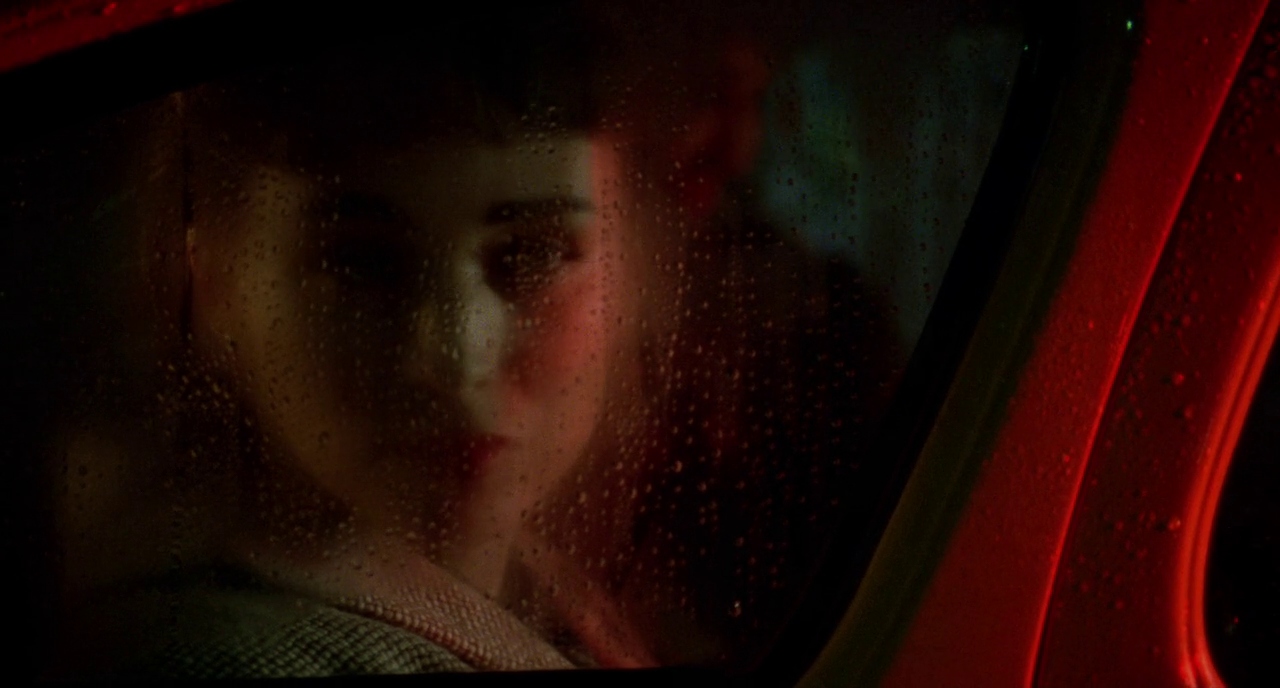
Behind the camera, Ed Lachman was pursuing a related kind of imperfection. He and Haynes looked toward photographers rather than the period’s studio melodramas or films noir, drawing on Helen Levitt, Ruth Orkin, Esther Bubley and Vivian Maier. Shooting on Super 16 helped Lachman approach the texture of early Ektachrome colour photography: grainier, cooler, less comprehensive in its colour range. The store’s carefully assembled stock would not be photographed with the brittle clarity of a catalogue. Its surfaces belonged to the women’s uncertain, developing view of one another.
Lachman also avoided diffusion filters on Super 16. Glass, reflections and weather supplied their own interference. His lighting drew on the rooms themselves—the positions of windows and practical fixtures—rather than imposing an obvious studio finish. Becker had built a place with the right bones; the camera could let it remain a place, not an exhibit. Between the merchandise and the grain, there was room for an accidental-looking encounter inside an environment that had required anything but accidental work.
The dropped-box scene disappeared; the boxes survived. That seems an appropriate fate for the labour behind Frankenberg’s: visible, but unlikely to be examined. While the audience watches two women notice each other, somewhere nearby sits a newly manufactured box, doing its best to look entirely unremarkable.