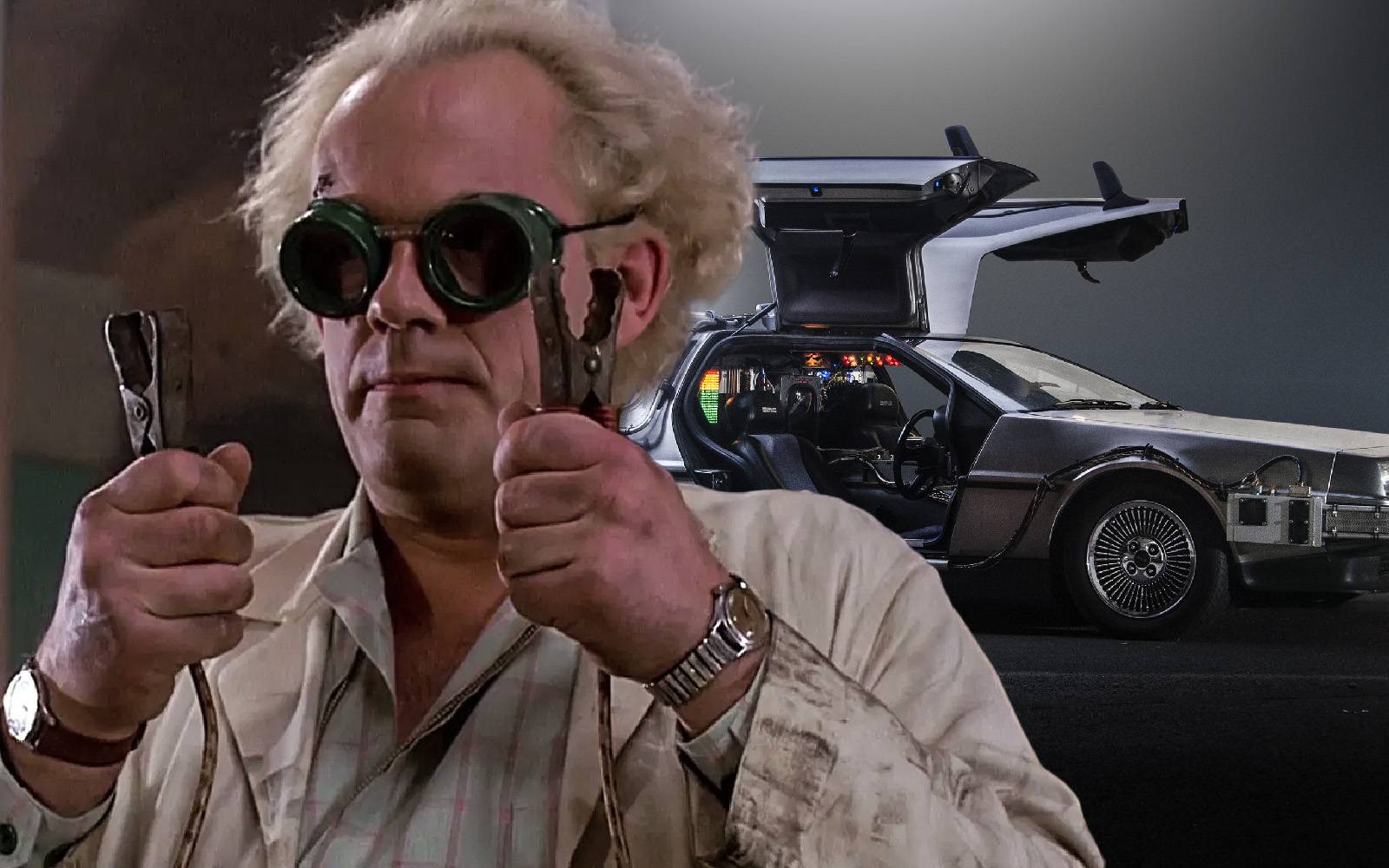
At about one in the morning, in a parking lot dressed as Twin Pines Mall, Robert Zemeckis was making a hit movie with the wrong star. The schedule was already odd by Hollywood standards and about to become deranged. Back to the Future had begun filming with Eric Stoltz as Marty McFly, and by the time anyone admitted the obvious, the production was five weeks deep, expensive, and stuck with a peculiar problem: nothing was exactly broken, but the picture wasn’t alive.
This was not the usual tale of a disaster actor being escorted off the lot. Stoltz had been cast seriously, and for serious reasons. Michael J. Fox had been the first choice, but he was tied to Family Ties; only when that obstacle shifted did the film get another chance at him. The AFI Catalog, drawing on contemporary reporting and production files, notes that Stoltz was fired after five weeks and replaced, with Zemeckis later saying the actor’s performance was “not in synch with” his vision. That is a tactful phrase, almost suspiciously polite, but it gets to the central issue. Stoltz was playing Marty as a young man in distress. The film needed a kid who could treat calamity like a tempo change.
Bob Gale, looking back, put it more bluntly: “The humour just hadn’t been coming through with Eric.” Dean Cundey remembered sensing, around the fifth week, that “some kind of change was in the air,” even before anyone said it aloud. By then, the crew had already shot major material that would have to be junked and started again. AFI records that the footage from those first five weeks was scrapped, the release date moved from June 21, 1985 to July 3, and Fox began the sort of work schedule now discussed with a wince: Family Ties by day, Back to the Future by night. Universal’s own production notes say he shuttled between the two, devoting days to the sitcom and nights to the film.
“The film needed a kid who could treat calamity like a tempo change.”
That scheduling fix became part of the movie’s grammar. Gale recalled that Fox would arrive at 6 p.m. and work until one or two in the morning. The film quietly adjusted around him. In the McFly family dinner scene, Gale noted, the others are often framed in two-shots while Marty is isolated in close-up, because Fox’s coverage had to be shot separately. It is one of those practical compromises that ends up looking like style. Marty already feels slightly out of phase with his home life; the production necessity helps sell the character. A good movie is often just an elegant arrangement of emergencies.
There is another reason the recasting matters beyond gossip. Back to the Future is built on hair-trigger tonal balance. Its premise is neurotic, almost indecently so: a boy goes back to 1955 and discovers his mother has a crush on him. Push it too far toward sincerity and it curdles; push it too far toward gag and it turns weightless. Fox supplied the missing hinge. Spielberg, in the original production notes, praised his “dry approach” on Family Ties and called him “a young leading man waiting to break through in the movies.” That dryness was the whole machine. Fox could look panicked, amused, embarrassed and game all at once. He made the plot feel fast instead of merely intricate.
The rest of the film’s famous ingenuity only works because that central frequency is right. Zemeckis and Gale had spent years revising the story. Their first notion for the time machine was a refrigerator, then a stationary chamber; only later did they land on the gull-winged DeLorean, after deciding the machine should move and seeing comic potential in the car’s look. In the earliest script versions, Marty’s return depended on an atomic blast at a test site, a concept Ken Ralston later said had initially attracted him to the project before the filmmakers simplified the climax to the clock tower strike. Practical, cleaner, better cinema. The whole movie is full of such decisions: complicated ideas refined into something that seems to have arrived fully formed.
Even the effects work was leaner than memory suggests. ILM handled 27 visual effects shots in total, and Cundey described a production more interested in storytelling than in showing off. That restraint matters. The picture feels rich in invention because the inventions are rationed. The DeLorean itself, according to Universal’s production material, emerged from collaborations among Ron Cobb, Andy Probert, Larry Paull and vehicle construction coordinator Mike Scheffe, who scavenged odd parts for the dashboard, vents and flux apparatus. Homemade was the brief. Not sleek. Not futuristic in a showroom way. A bomb on wheels assembled by a brilliant crank.
Then came the real race. After the first preview went well, Gale said the studio was so encouraged it pulled the release forward, and the film reached cinemas just nine and a half weeks after wrapping. That kind of finish is usually discussed as triumph. It was also cleanup — cleanup after a costly, frightening decision that could easily have sunk the picture. Instead it gave Back to the Future its pulse. You can still feel it in Fox’s performance: the velocity, the sleep deprivation, the sense that the film is somehow catching itself in mid-air. Marty McFly looks as if he has just arrived at the last possible second. In a way, he had.